
If your driveway, patio or sidewalk was poured this year, follow one rule this winter: no rock salt and no deicing chemicals of any kind. Use plain sand for traction instead. Michigan concrete-industry guidance is clear on this — and getting it wrong can permanently scar a brand-new slab.
The short version
Spalling is the surface of your concrete flaking or scaling away — and in Michigan it's almost always freeze-thaw cycles and de-icing salt doing the damage. Small patches can sometimes be repaired, but widespread spalling usually means the surface is failing and replacement is the smarter spend.
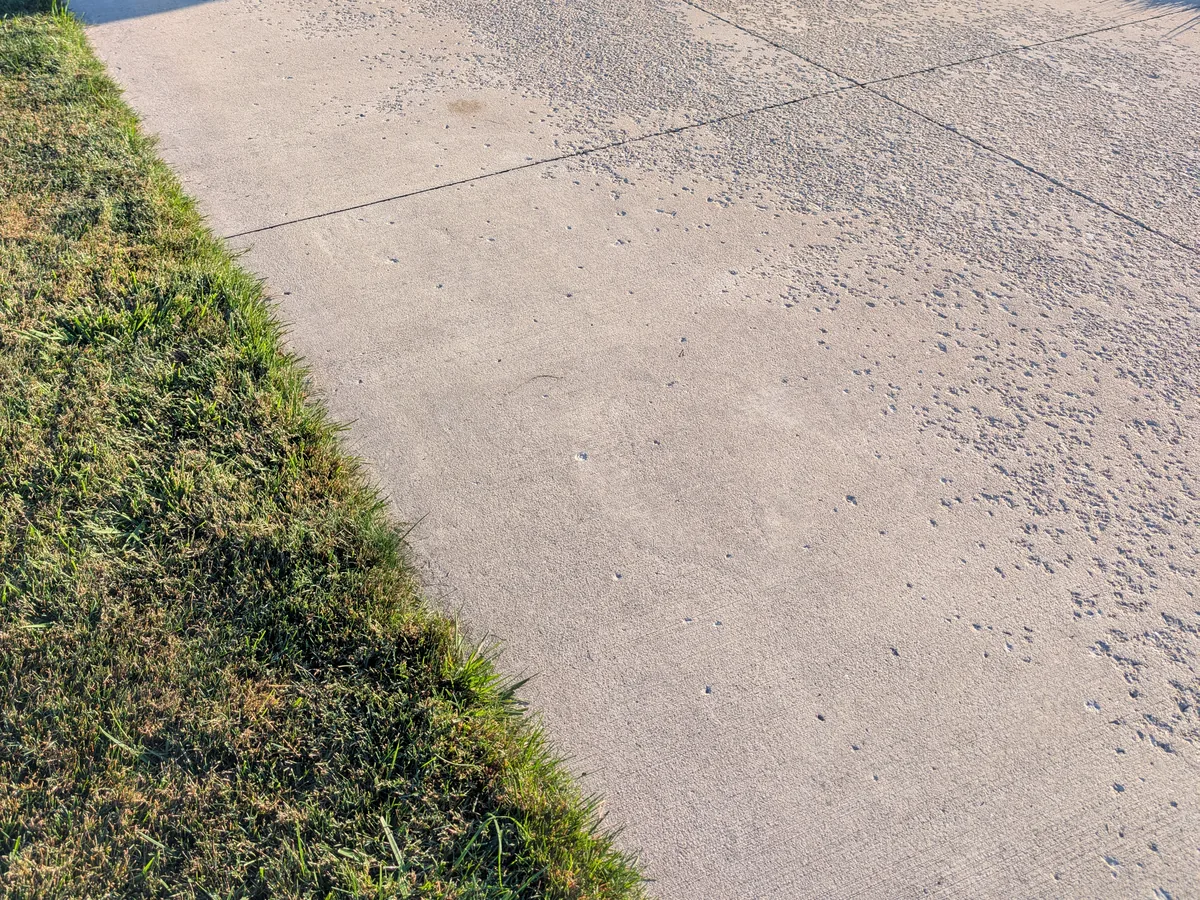
"Spalling" is the word inspectors, contractors and — lately — your search bar use for concrete whose surface is flaking, scaling or breaking away. If your driveway or sidewalk has patches where the smooth finish has popped off and you can see rougher, grainier material underneath, that's spalling. Some people call the advanced version "concrete cancer." Homeowners usually just say their driveway is flaking, peeling or pitting — same thing.
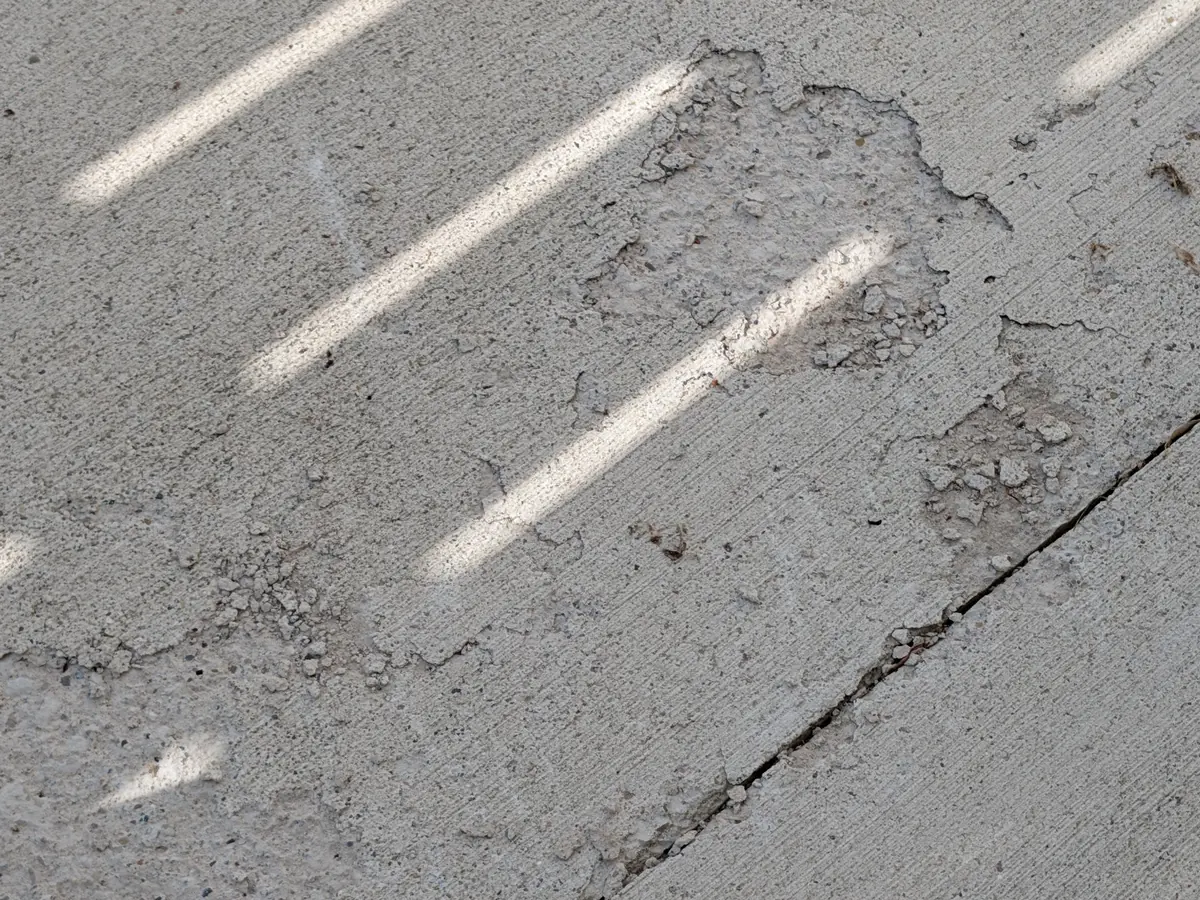
What spalling looks like
It starts small: thin flakes of the surface popping loose, a patch that looks sandier than the rest of the slab, or crumbly edges forming along a control joint like the photo above. At this stage most people ignore it. Advanced spalling is impossible to ignore — whole sections of surface gone, exposed stone, pits deep enough to catch a shovel blade. The important part: it accelerates. Every bit of lost surface exposes more of the slab's interior to the water and salt that caused the damage in the first place, so a driveway that took fifteen years to start spalling can look terrible three winters later.
What causes spalling in Michigan
Two culprits do almost all of it here, and they work as a team. The first is our freeze-thaw climate: water soaks into the concrete's surface, freezes, and expands about 9% — pushing outward from inside the slab. A Metro Detroit winter puts a driveway through dozens of these cycles, and each one tries to pop a little more surface loose. We covered the mechanics in why Michigan driveways crack.
The second is de-icing salt, and it's the accelerant. Salt keeps water liquid at lower temperatures, which means more freeze-thaw cycles per winter, deeper in the surface — and on top of that, it chemically attacks the cement paste. Salt on concrete that's less than a year old is the fastest way to ruin a new slab, which is why we tell every customer to keep de-icers off it the first winter.
There's a third cause worth naming honestly: bad concrete work. A slab poured without an air-entrained mix, finished while bleed water was still on the surface, or cured wrong will spall years early no matter how careful the homeowner is. When we look at a spalled driveway, part of the diagnosis is figuring out which story it's telling.
About that photo
The picture above isn't from the internet — it's a driveway we poured two years ago. The concrete was right: proper mix, proper finish, proper cure. What it couldn't survive was rock salt in its first winter. We're showing it because it's the most honest salt warning we can give: this is what de-icer does to young concrete, even when everything else was done correctly. It's also why our workmanship warranty covers our work but can't cover salt damage — no contractor's can, because no concrete resists it.
Can spalled concrete be repaired?
Sometimes — and this is where you should want a straight answer instead of a sales pitch. A small, shallow spall on otherwise healthy concrete can be patched or the surface can be overlaid. But two honest limits: patches almost never match the surrounding finish, and repairs on a surface that's already scaling tend to let go along their edges within a few winters, because the surrounding concrete keeps deteriorating out from under them.
The practical decision guide we use on estimates: if the spalling is limited to one or two small areas on a slab that's otherwise flat, uncracked and under 15 years old, a repair can buy real time. If it's showing up in multiple places, coming back after previous repairs, or the slab also has cracking, settling or drainage problems — the surface is telling you it's done, and money spent patching is money you'll spend again. At that point a tear-out and replacement, poured with an air-entrained Michigan mix and cured properly, costs more up front and dramatically less per year of service.
How to prevent it
On your side: no de-icing salt the first winter (use sand for traction), go easy on it every winter after, and keep the slab sealed on schedule — a good sealer is the single best defense because it cuts off the water absorption that drives the whole process. On our side: air-entrained mix designed for freeze-thaw, finishing at the right moment, a proper cure, and honest guidance on sealing when we hand the job over. Spalling is one of the most preventable concrete problems there is — it just has to be prevented from day one.
Get a Free Estimate
Family-run and serving Metro Detroit since 1989. Get an instant ballpark online, then a free on-site quote.